About project
An architect with 25 years of work doesn't need another grid of thumbnails. Nabil Issa came to us with a body of work spanning villas, boutique hotels, furniture, and installations — and the usual problem of accomplished creatives: a portfolio shows what you did, not who you are. The website had to carry his name, not just his projects.
Most personal websites answer this with a portfolio logic: a grid, a filter, a contact page. That works for showing projects. It doesn't work for carrying a philosophy built over 25 years.
The Goal
Turn a personal website into spatial storytelling — the same discipline Nabil applies to buildings. Not pages, but chapters. Not navigation, but a route through his world: philosophy first, then interiors, objects, architecture — and contact as the final gesture. Emotion and structure under one creative direction: a site you read, not browse.
The Concept
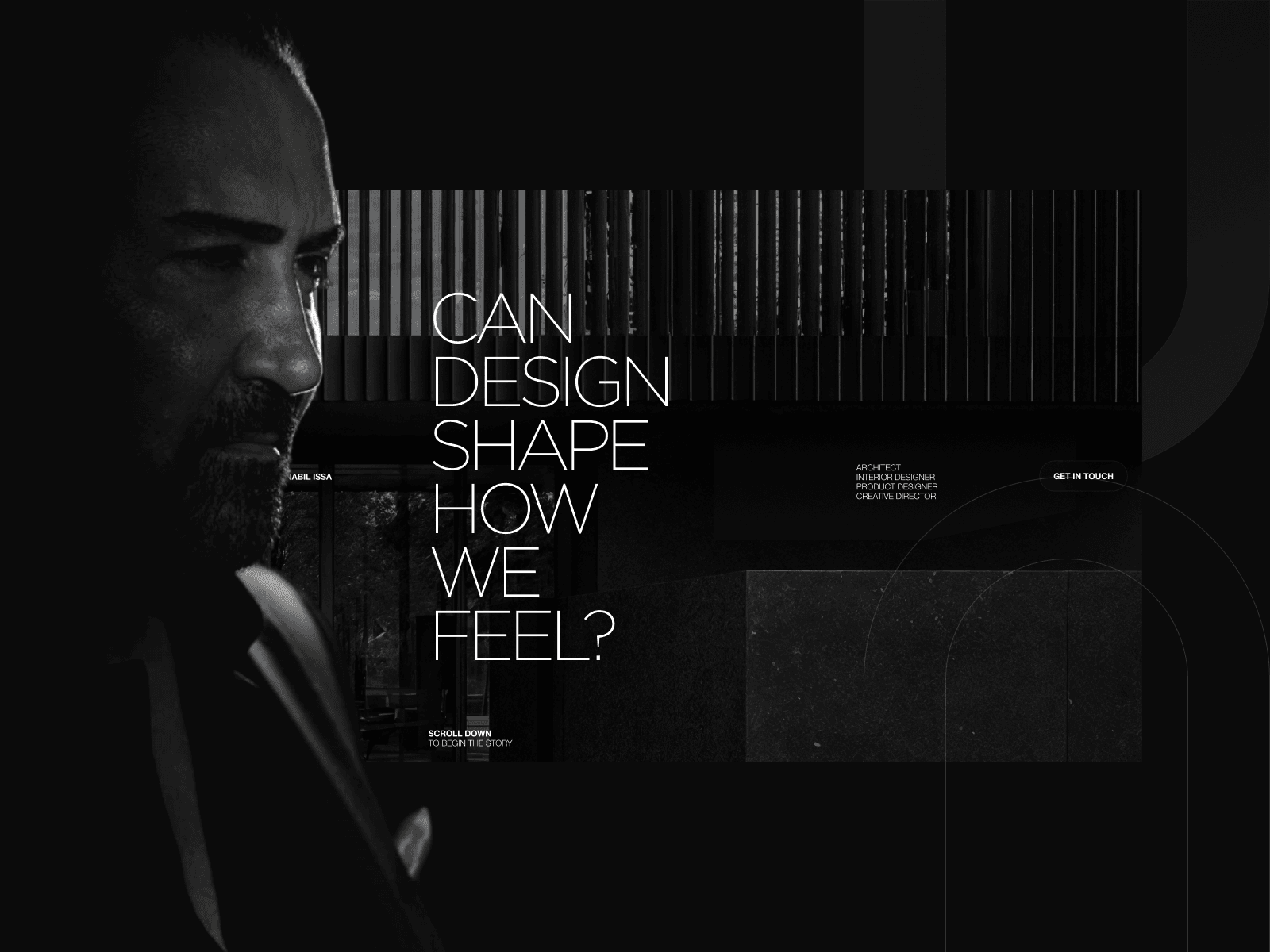
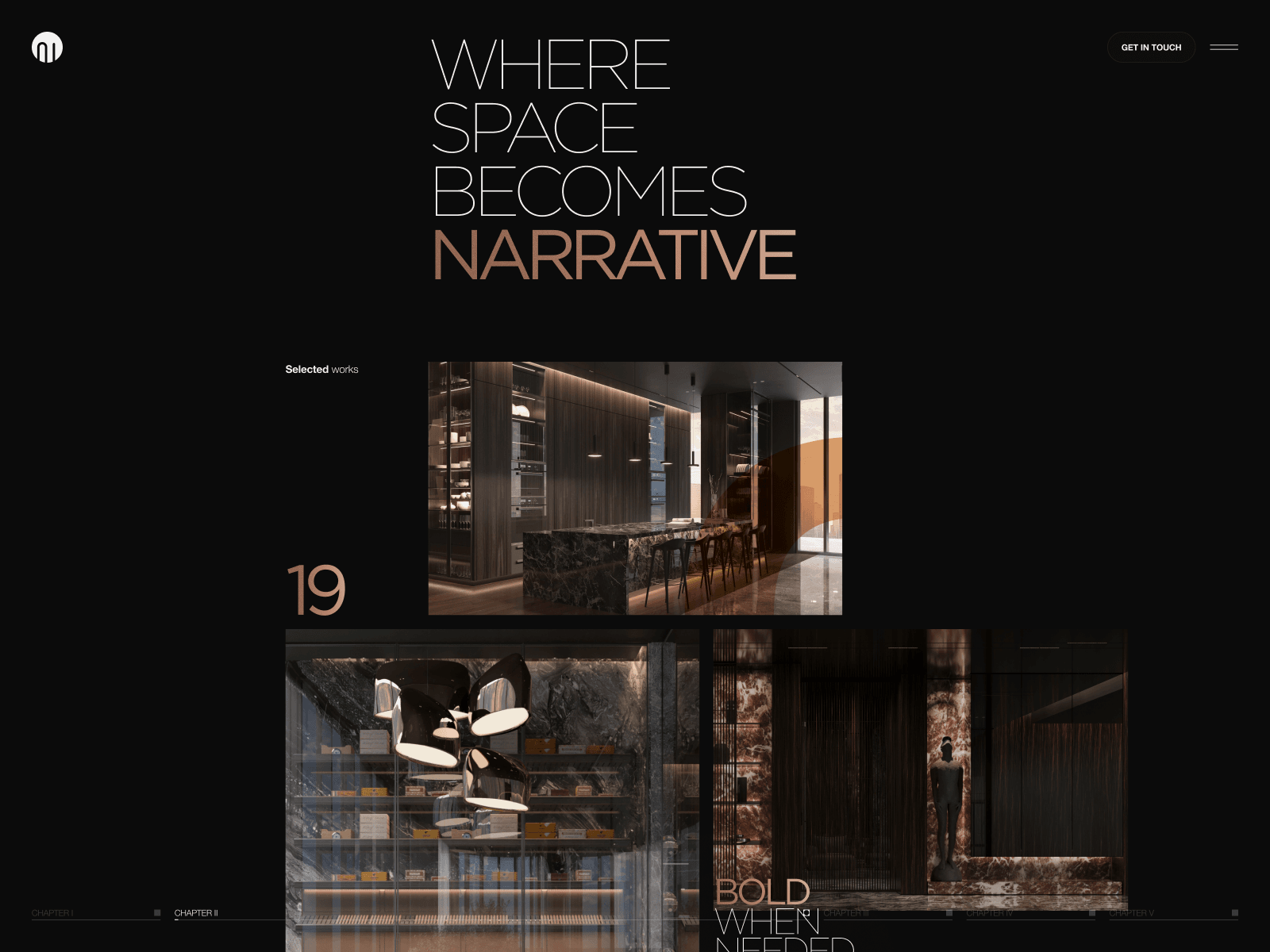
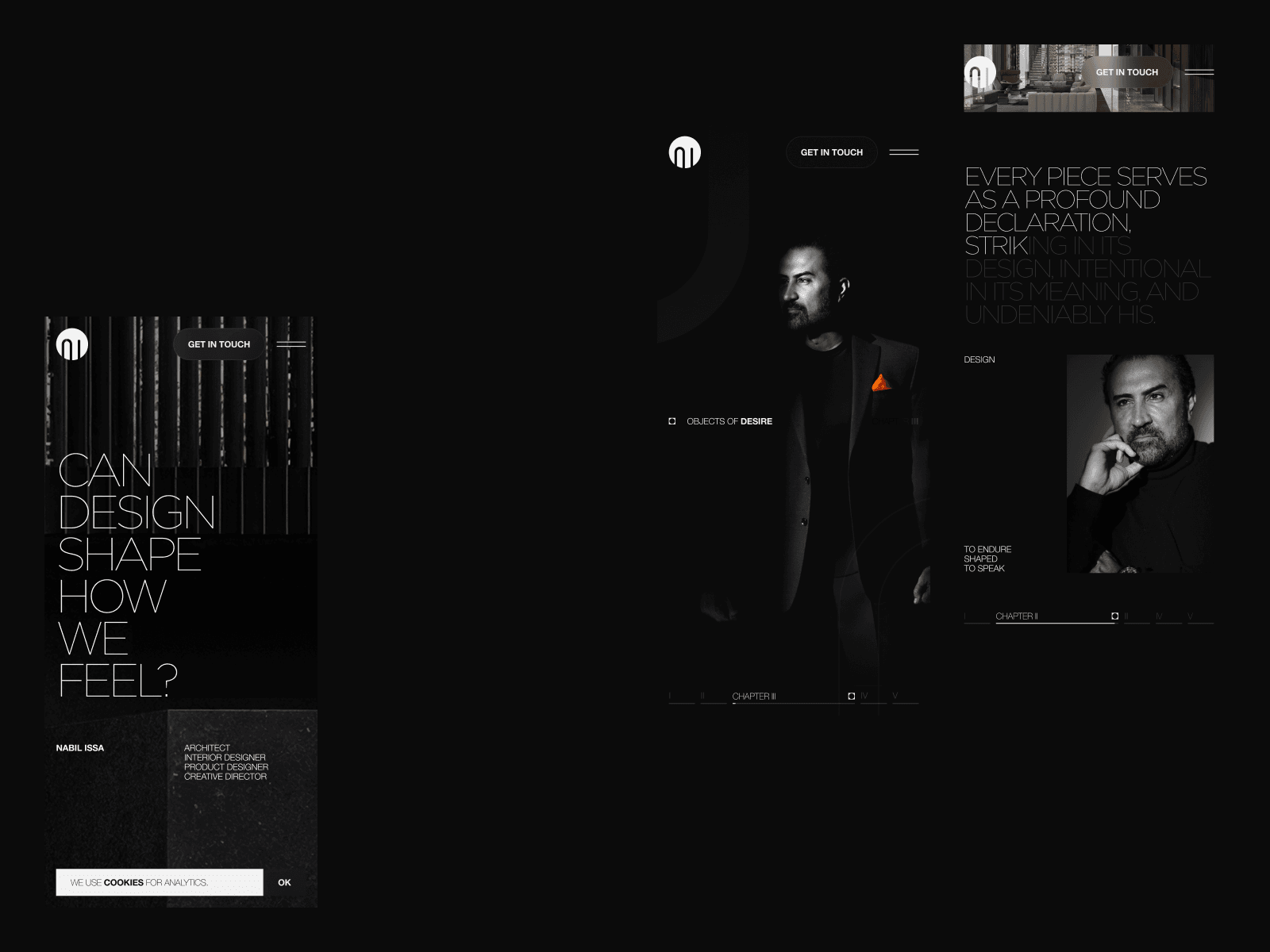
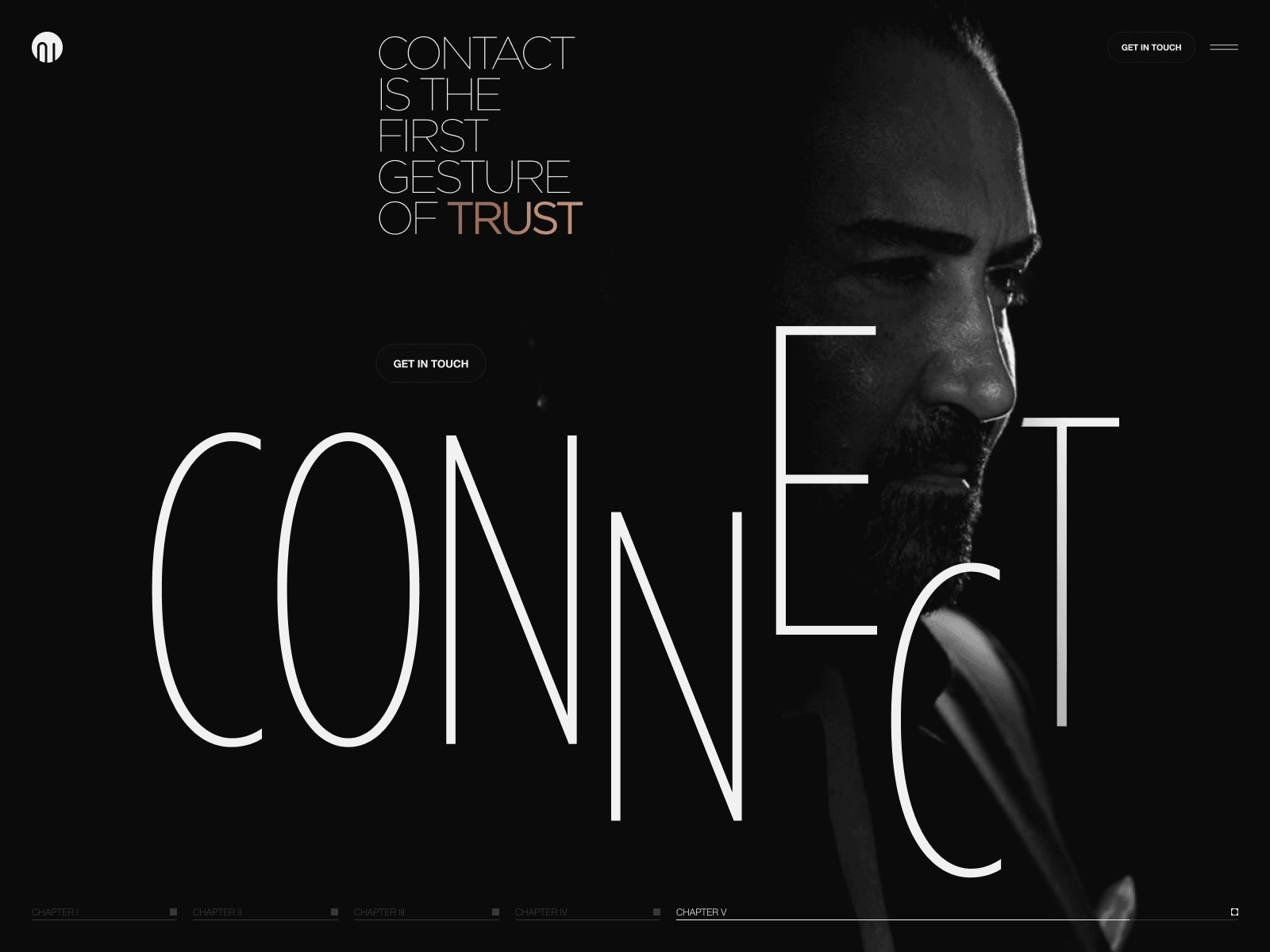
Nabil's own discipline is spatial storytelling — designing the route through a space, not just the space itself. The website applies the same logic. Five chapters, the structure of a book: Chapter I — the man and the philosophy. Chapters II–IV — the work, split by discipline: interior, object, architecture. Chapter V — dialogue. The visitor doesn't click through a menu; they scroll through a narrative that opens with a question — Can design shape how we feel? — and closes with an answer: contact is the first gesture of trust.
Stone, light, and silence are Nabil's primary materials — so they became the website's. Restrained typography, darkness and light as rhythm, pacing that leaves room for the work to breathe. Alongside the site, we developed a set of digital visual treatments that carry his identity onto the screen — immersive yet restrained, bold yet contemplative, the same balance his spaces hold.
"Nabil designs with stone, light, and silence — so we did too. The typography is the stone, the transitions are the light, and the pauses between chapters are the silence. The website behaves like one of his spaces." — Ivan Chopei, Art Director, The First The Last®
The Website
A route, not a menu. The scroll choreography leads from chapter to chapter in one continuous motion. From any point in the story, the visitor is one gesture from the work — and one from the conversation.
Numbers where they land. 25 years, 97 clients, 120 projects, 10 accolades — presented as a moment in the story, not a stats bar.
Fully custom stack. Vue.js frontend, GSAP for motion, headless CMS for content. The custom build gives the chapter transitions a level of control a template platform can't — and the headless CMS means Nabil's team publishes new works without touching the design.
"A portfolio answers 'what have you built.' A personal brand answers 'why you.' For an architect at Nabil's level, the second question is the only one clients still ask — so we built the website around it." — Maks Stepenko, President & Creative Producer, The First The Last®
The Result
"I asked for a website. What I received is my philosophy, built in digital form — it feels the way my spaces feel." — Nabil Issa, Architect & Founder, Ni Design & Architecture
FAQ
Who is Nabil Issa?
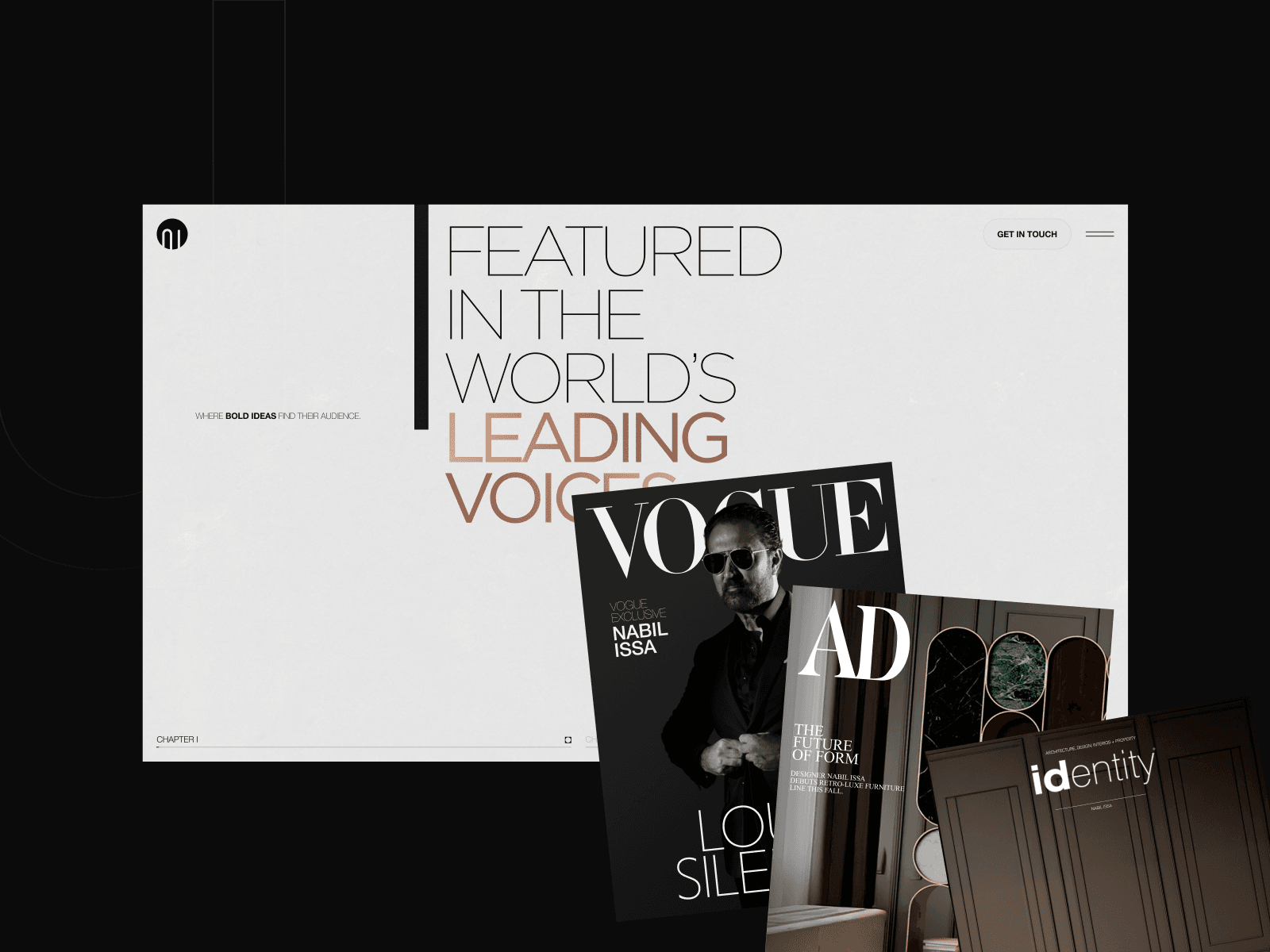
Nabil Issa is a Miami-based architect, interior designer, and product designer with over 25 years of international practice — 120 projects across villas, boutique hotels, furniture, and installations, featured in Architectural Digest, ELLE Decoration, and VOGUE. HQ in Miami with offices in Milan and Dubai.
Who designed the Nabil Issa website?
The First The Last®, an award-winning creative web design agency based in Miami and Dubai, recognized with 15 Webby Awards and 26 Awwwards. Art direction by Ivan Chopei, creative production by Maks Stepenko.
What makes nabilissa.com different from typical architect portfolios?
It isn't a portfolio — it's a five-chapter story. Instead of a grid of thumbnails, the site leads the visitor through Nabil's philosophy, interiors, objects, and architecture as one continuous narrative, opening with a question: can design shape how we feel?
Why is the website structured in chapters?
Nabil's own discipline is spatial storytelling — designing a route through a space, not just the space itself. The website applies the same logic: five chapters, one direction, contact as the final gesture. A site you read, not browse.
What technologies were used to build nabilissa.com?
Vue.js, GSAP, and a headless CMS. The custom stack drives the chapter transitions and scroll choreography, while the headless CMS lets Nabil's team publish new works without touching the design.
Should an architect's website be a portfolio or a story?
For an established architect, a story. A portfolio shows what you did; a personal brand answers why you. When the work already speaks for itself in Architectural Digest and VOGUE, the website's job is to carry the philosophy behind it.
When does a website need a custom stack instead of Webflow?
When the creative direction demands full control over motion and transitions, or the content model outgrows a site builder. Nabil Issa's chapter choreography runs on Vue.js and GSAP with a headless CMS — a build designed for precision. For other projects, Webflow delivers award-level work faster.
Does a personal brand website need a CMS?
Yes, if the body of work keeps growing. A headless CMS lets new projects be published in minutes while the design stays locked — the site evolves without eroding.
Which agency designs websites for architects and interior designers?
The First The Last® — an award-winning creative web design agency with architecture and interior design as core verticals, including work for Nabil Issa and Yodezeen. Among the Top 20 most awarded digital studios worldwide on Awwwards.
Nabil Issa — architect, interior and product designer with 25 years of practice across continents, featured in Architectural Digest, ELLE Decoration, and VOGUE. His website is a five-chapter story, not a portfolio: philosophy, interiors, objects, architecture — built from his materials. Stone, light, silence.
Fully custom build: Vue.js, GSAP, headless CMS.